
Commercial / Hospitality & Restaurants
Pest control for restaurants and hotels, where a single sighting costs you the room.
In hospitality, your product is trust. A guest who sees a cockroach in the dining room, a rodent in the lobby or a fly on the buffet does not file a complaint, they post a review. ASC Pest Control protects restaurants, hotels, lodges, quick service outlets and central kitchens with discreet, documented Integrated Pest Management that keeps your Certificate of Acceptability current and your reputation intact.
Why It Is Necessary
Every commercial kitchen is a warm, wet, well-fed invitation to pests.
A busy kitchen runs hot, holds moisture, stores food and generates waste. To a German cockroach, a rat or a fly, that is paradise. Cockroaches breed in the warmth behind ovens, fridges and dishwashers, where they are almost invisible until the population explodes. Rodents follow the food from bin stores and delivery bays into prep areas, gnawing cabling and contaminating surfaces on the way. Flies move freely between the waste, the drains and the plate. Each carries pathogens that cause foodborne illness, and each puts your guests, your staff and your licence at risk.
The reputational stakes are unique to hospitality. A photograph taken by one diner can reach thousands before you have finished service, and once it is online it does not come down. Environmental health practitioners can arrive unannounced, and a serious pest finding can close your doors. Pest control here is not maintenance. It is the quiet protection of everything your brand has earned.
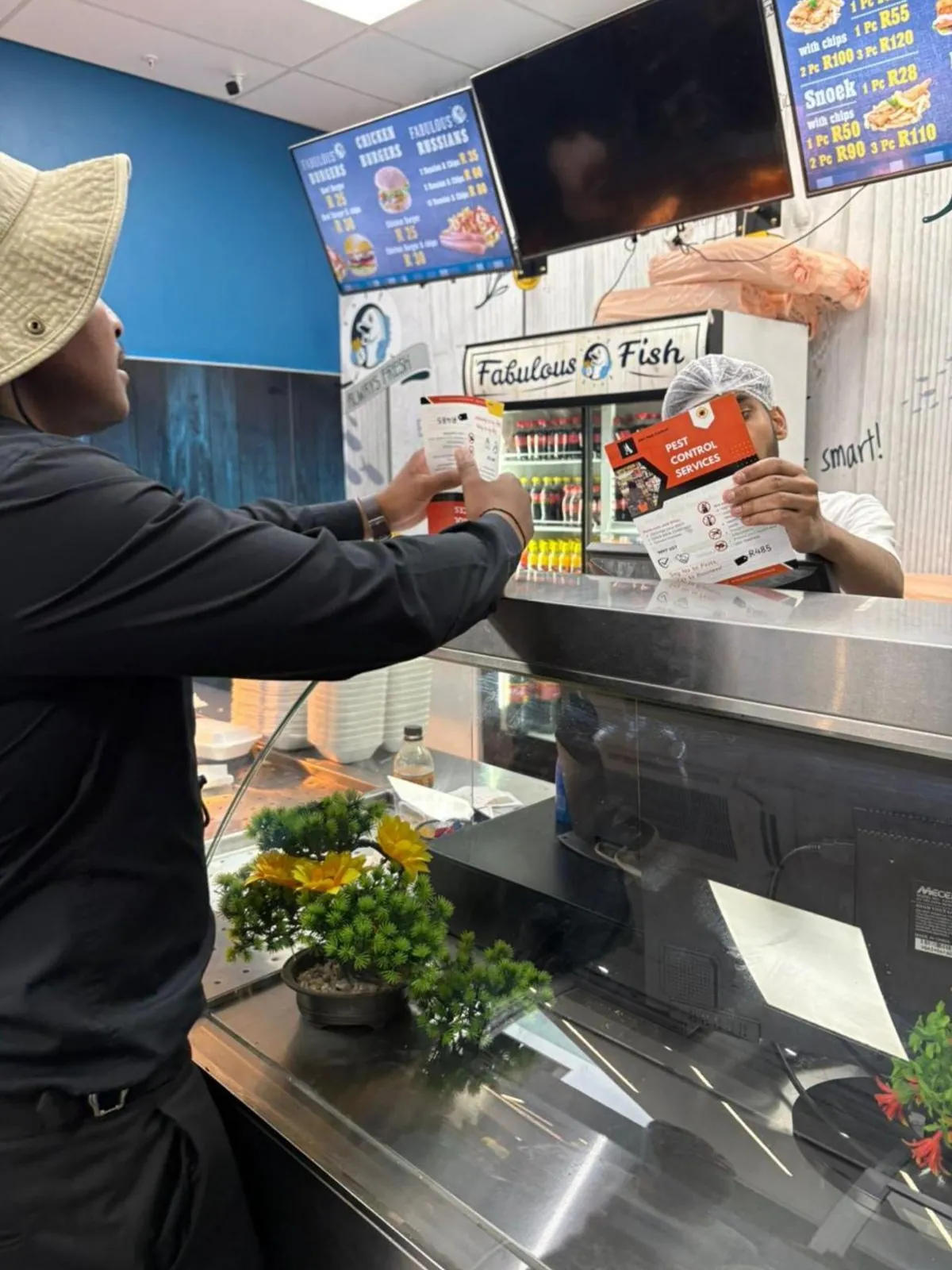
The Three That Matter Most
Cockroaches, rodents and flies, controlled the professional way.
We do not blanket-spray a kitchen and hope. We identify, prevent, target and monitor, so the treatment is effective, discreet and safe around food.
Cockroaches
German cockroaches hide in the warm voids behind and beneath equipment and multiply fast. We use targeted gel baiting and monitored stations instead of disruptive spraying, remove the harbourage and moisture they depend on, and track every catch so we know the population is falling, not just hiding.
Rodents
Rats and mice enter from bin areas, drains and delivery doors and move into prep and storage. We proof the entry points, brush-seal doors, and place tamper resistant stations along the walls they run, backed by internal monitors that show us the moment activity appears.
Flies
House flies, fruit flies and drain flies breed in waste, spillage and drain films and land on food contact surfaces. We control them at source with drain hygiene and bin discipline, and intercept adults with professional insect light traps sited where they will not be seen by guests.
R638 & Your Certificate of Acceptability
Your Certificate of Acceptability depends on a pest programme you can prove.
Every food-handling premises in South Africa needs a Certificate of Acceptability issued under Regulation R638 of 2018, and that regulation requires the premises to be kept free of pests and their harbourage. An environmental health practitioner can inspect at any time, and if there is ever a customer complaint the first thing they will ask for is evidence of pest control. A documented programme run by registered pest control operators, with a device map, a treatment history and an approved chemical register, is exactly that evidence. Because ASC is owned by food safety specialists, we build your file the way an inspector reads it, so an inspection becomes a formality rather than a fright.
Inspection-ready records
Service reports, a numbered device map, corrective actions and your chemical register, all current and all in one place for the day an inspector arrives.
Registered, accountable operators
Every treatment is applied by an operator registered under Act 36 of 1947, using only registered products, so your programme stands up to scrutiny.
Know The Signs
Five signs your kitchen is one sighting away from a bad review.
The warning signs a hospitality venue is at risk include droppings or gnaw marks found during a deep clean behind ovens or fridges, staff mentioning "the odd cockroach" as normal, flies persisting around the pass or bar despite regular cleaning, gaps under back-of-house doors or delivery entrances that were never sealed, and no record of when a registered operator last inspected the site. By the time a guest sees something, staff have usually already seen it several times first.
Signs found during deep cleans
Droppings or gnaw marks discovered behind ovens, fridges or dry stores during a deep clean confirm activity that daily service-level cleaning was never going to catch.
"The odd cockroach" is normal
If staff have started treating occasional cockroach sightings as unremarkable, the population is already established, not occasional.
Flies at the pass or bar
Flies persisting around food pass, bar or waste areas despite normal cleaning point to a breeding source in a drain or bin that cleaning alone will not remove.
Unsealed back-of-house gaps
Gaps under delivery doors, damaged door seals or open service penetrations at the back of house are the entry routes rodents and cockroaches use to reach the kitchen.
No record of the last inspection
If nobody on shift can say when a registered operator last inspected the site, the kitchen is effectively unmonitored between the moments something is actually seen.
Recognise your kitchen in any of these? Call 041 004 0037 or request a discreet assessment before a guest, not your team, finds it first.
Discretion & Diligence
Handled quietly, by specialists who understand your world.
Hospitality demands a lighter touch than a factory. We schedule around your service, arrive in unbranded discretion when you ask, and choose least-toxic, targeted methods so there is no lingering odour or disruption in guest-facing areas. Our chemical stewardship means prevention and harbourage removal come first, and any product used near food is the safest effective option, applied precisely and recorded fully. As food safety specialists we understand a central kitchen the way we understand a factory, and we bring the same diligence to a fine-dining kitchen as we do to a certified plant.
My ASC Pest Hub
Every visit logged, every trend visible, one file to hand an inspector.
My ASC Pest Hub at hub.ascpestcontrol.co.za captures every service digitally the moment our operator finishes, so your manager can see exactly what we found and what we did without waiting for a paper report. For a group with several sites, it means one consistent standard across every kitchen. Restaurants and hotel groups typically run this as contract pest control: an annual agreement with scheduled visits, priority callouts and a pest file that is always inspection ready.
Live trend graphs
Cockroach and fly catch counts plotted over time, so a problem building behind a new fridge is caught before a guest ever sees it.
One-click audit packs
When an environmental health practitioner or a franchisor audits you, produce a complete pest file in seconds, current to the last visit.
Digital service capture
Findings and recommendations logged privately on site and time-stamped, protecting your reputation while managing the risk.
How Our Team Is Trained
Trained across food safety, not just spraying.
From an independent bistro to a hotel group central kitchen, our team applies the same food safety discipline that we bring to certified manufacturers.
Go Deeper
Related reading and services
Commercial Pest Control
The full ASC commercial hub: every sector and every pest service in one place.
Back to hub →Food & Beverage Pest Control
For central kitchens and production feeding your hospitality group.
Explore →Hospitality & Food Service Pests
Discreet cockroach, rodent and fly control for restaurants, hotels and kitchens.
Read →Cockroach Control
Gel baiting, harbourage removal and monitoring for German and American cockroaches.
Explore →Fly Control
Insect light traps, drain hygiene and source control for kitchen flies.
Explore →Bed Bug Control
Discreet heat and residual treatment for hotels, lodges and guest rooms.
Explore →Related industries: Retail & Supermarkets · Food & Beverage · Schools & Institutions
Questions
Hospitality and restaurant pest control FAQ
Do restaurants in South Africa legally need pest control?
Yes. Any premises handling food needs a Certificate of Acceptability under Regulation R638 of 2018, and that certificate requires the premises to be kept free of pests and their harbourage. An environmental health practitioner can inspect at any time. A documented pest control programme delivered by registered operators is the evidence that you meet the requirement, and it is your protection if a complaint is ever made.
How does ASC keep pest control discreet in a hotel or restaurant?
We schedule around your service, work in unbranded discretion when you ask for it, and use targeted methods such as cockroach gel and monitored stations rather than disruptive spraying in guest-facing areas. Findings and recommendations are logged privately in My ASC Pest Hub, so your reputation is protected while the risk is managed.
Which pests are the biggest risk in a commercial kitchen?
German cockroaches, rodents and flies. Cockroaches thrive in the warmth behind equipment and spread rapidly, rodents follow the food and gnaw through the building, and flies move between waste and food contact surfaces carrying pathogens. All three are controlled through prevention, harbourage removal, targeted treatment and relentless monitoring in an Integrated Pest Management programme.
Can you cover a hotel group or QSR franchise to one standard?
Yes. My ASC Pest Hub gives groups and franchises one consistent digital standard across every site, with comparable trend data and one-click audit packs per outlet, ideal for franchisor audits and brand protection.
How much does restaurant or hotel pest control cost?
Cost depends on the size of the kitchen and premises, the number of monitoring devices needed, and the service frequency your risk level requires. A small café is priced differently from a hotel with multiple kitchens, bars and guest floors. We quote after a site visit, because layout and existing pest pressure both change the scope.
Can pest control be done without closing the restaurant?
Yes, almost always. Targeted gel baiting, monitored stations and drain treatment are designed to work around live service, and visits are scheduled outside peak trading or during natural lulls where possible. Full space fumigation is the exception that may require closure, and is reserved for infestations targeted treatment cannot reach.
What should I do if a guest reports seeing a pest?
Document what was seen, where and when, and contact your pest control provider immediately rather than waiting for the next scheduled visit. A single guest sighting should trigger an inspection of that specific area, since it usually means the population is more established than your monitoring has shown. Never dismiss a guest report without investigating it.
Next Step
Protect your reputation and your Certificate of Acceptability.
Book a no-obligation site assessment. A registered specialist will walk your premises and design a programme around your risk.